

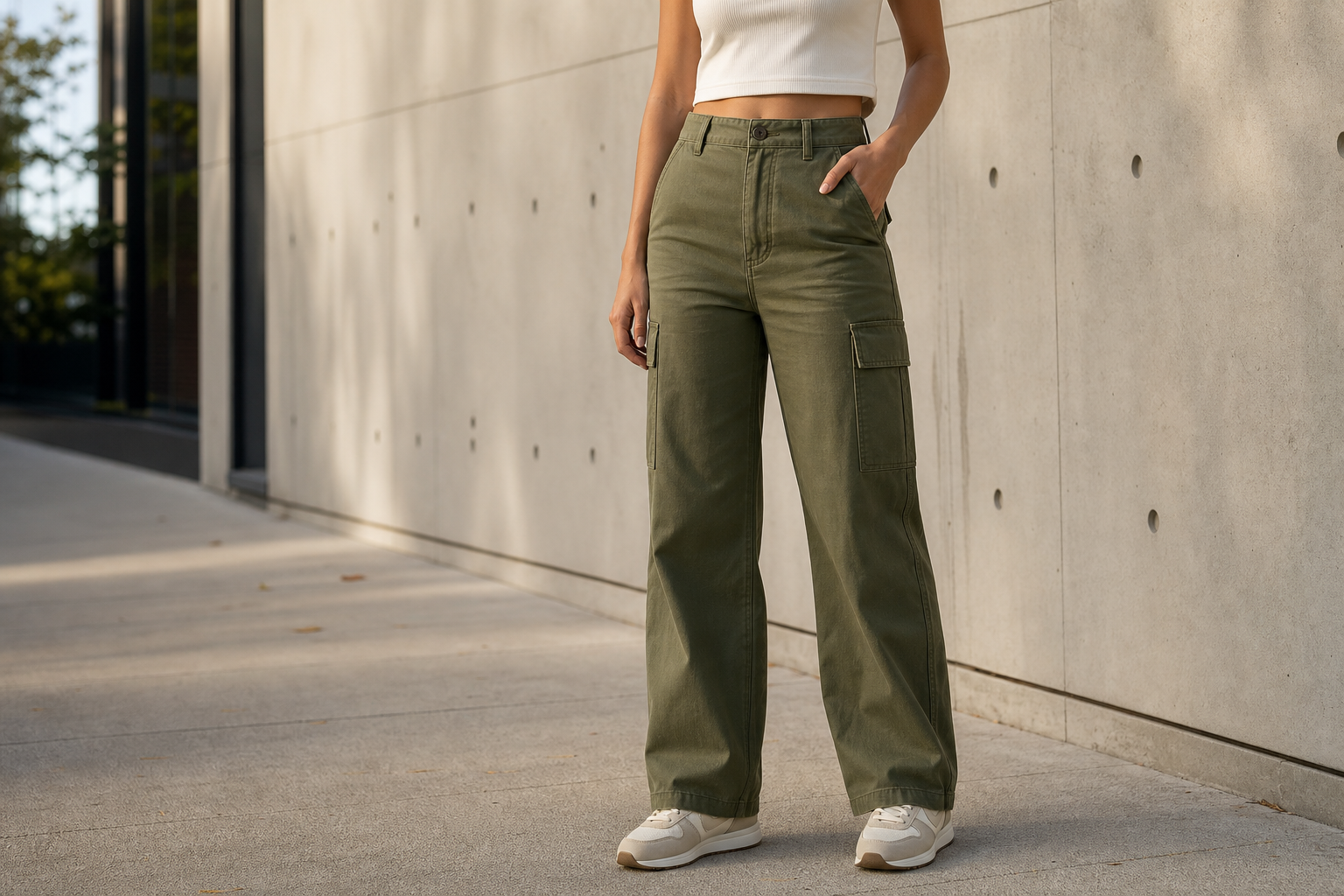
The short answer: cargo pants should sit securely at your chosen rise without digging in, gaping or sliding; give you room to sit and take a full stride; and keep loaded pockets from pulling the garment out of position. The hem should work with your usual footwear rather than dragging under your heel. Because “relaxed,” “wide leg” and “high rise” are style descriptions—not universal measurements—the current size chart and garment details matter more than the label alone.
Use this guide as a practical comparison method, then check the live product page for fabric, measurements, colour availability and care instructions before ordering. Fit preferences vary, and the best result is the pair that stays comfortable through your real movements and routine.
Cargo-pant fit at a glance
| Area | A useful fit check | Warning sign |
|---|---|---|
| Waist and rise | Stays in place while sitting and walking | Pinching, gaping or repeated pulling up |
| Seat and thigh | Allows a chair sit and long stride without strain | Horizontal stress lines or restricted movement |
| Pockets | Lie reasonably flat and remain usable | Flaps pulling open or a phone swinging heavily |
| Hem | Clears the ground with your intended shoes | Dragging, bunching or catching beneath the heel |
1. Start with the rise and waistband
Rise describes where the waistband sits in relation to your torso. A high-rise cargo style can provide more waist coverage, while a mid- or lower-rise cut changes the visual proportion and where the garment is anchored. Neither is automatically more comfortable; torso length, body shape and personal preference all affect the result.
Fasten the pants without holding your breath. Slide a finger comfortably inside the waistband, sit for a minute and stand again. The waistband should not roll, sharply compress the skin or leave a large gap at the back. A rigid waistband needs enough ease for sitting. A drawstring can fine-tune the fit, but it should not be used to compensate for a garment that is dramatically too large.
For a structured comparison, review the High Rise Flap Pocket Side Cargo Pants. If adjustability is the priority, compare a drawstring construction such as the Flap Pocket Drawstring Cropped Cargo Pants. These links are examples from the current active catalog, not a promise that one rise suits every shopper.
2. Test room through the seat and thigh
Cargo pants often have a relaxed silhouette, but “relaxed” should still move with you. Sit in a firm chair, lift each knee, take a long step and perform a shallow squat. The fabric should not pull tightly across the front rise, seat or upper thigh. A few natural folds are expected; strong horizontal lines, pocket distortion or a zipper area under tension can indicate that more room is needed.
Also watch for excess volume that interferes with movement. If the crotch drops much lower than intended or the legs twist as you walk, compare the garment measurements with a pair you already like. Measure that reference pair flat and use the store’s stated method, because brands may define waist, hip and inseam points differently.
3. Choose fabric behavior for the way you move
Non-stretch woven fabric usually holds a crisp cargo shape, but it needs sufficient ease because it will not recover like an elastic fabric during a deep bend. The active Slant Pocket Non Stretch Cargo Pants are a useful example when comparing that structured category. Denim cargo jeans can feel more substantial and develop wear patterns over time; compare the Flap Pocket Denim Cargo Jeans for the current construction details.
Do not infer fibre content from appearance. Read the product description and care label. Fabric weight, weave, finishing and garment construction can influence drape as much as a single fibre name. Follow the listed wash and drying directions to reduce avoidable fading, shrinkage or damage to trims.
4. Treat cargo pockets as functional design
Large side pockets add visual volume and can carry small essentials, but pocket placement changes how the pants hang. Test the empty garment first. Then add only what you realistically carry—perhaps a phone or card case—and walk. The waistband should remain level, the side seam should not twist and the pocket should close without strain.
Flap pockets help cover an opening, while zippers or other closures may offer more retention. A flap alone does not guarantee that valuables are secure. Heavy, sharp or bulky objects can distort the silhouette, wear the fabric and become uncomfortable against the leg. For travel, distribute weight instead of loading one side.
5. Match the hem to footwear and weather
For a full-length wide leg, put on the shoes you expect to wear most. The back hem should clear the ground when standing and continue to clear it during a normal stride. A hem that drags can soil and abrade quickly and may become a trip concern. If the pants are intentionally long, professional hemming can preserve a clean finish.
Cropped cargo pants reduce ground contact and display more of the shoe. Drawstring or adjustable hems can change a leg from open to gathered, but tighten both sides evenly and keep loose cords away from moving equipment. In wet weather, avoid letting absorbent hems trail through water; follow the garment’s drying instructions afterward.
A two-minute fitting-room movement test
- Fasten the pants normally and check the waistband from front, side and back.
- Sit, stand, take a long stride and lift each knee without forcing the movement.
- Place your usual small item in a pocket and walk several steps.
- Try the intended shoes and confirm the hem clears the floor.
- Check that seams, closures and pockets return to position when you stand naturally.
If you are shopping online, repeat these observations on a well-fitting pair you own and compare its listed measurements. Measure twice, record the units and prioritize the larger relevant body area when you fall between sizes, subject to the store’s size guidance and the cut you want.
Frequently asked questions
Should cargo pants be loose or fitted?
They can be either, but the garment should still allow normal movement and keep its closures and pockets from straining. A fitted style needs adequate ease at the seat and thigh; a loose style should stay anchored at the waist.
How do I know whether cargo pants are too long?
Wear your intended shoes and walk. If the hem repeatedly touches the ground, folds under the heel or makes you shorten your stride, consider a shorter inseam, cropped style, adjustable hem or alteration.
Do drawstring-waist cargo pants fit more sizes?
A drawstring provides adjustment within the garment’s designed range, but it does not replace checking hip, rise and leg measurements. Excess fabric can still bunch, and an undersized garment can still restrict movement.
Are cargo pockets safe for a phone?
That depends on pocket depth, closure, device size and activity. Test carefully at home. Do not assume an open or flap pocket will retain a valuable during running, cycling or vigorous movement.
Bottom line
Choose cargo pants in this order: decide on rise, verify seated and walking room, understand the fabric, test the pockets with realistic weight, then confirm the hem with your footwear. That sequence turns broad style labels into a fit decision based on how the pants actually work for you.